
Exodus introduces us to a range of laws and rules to follow in God’s name. The most commonly known are The Ten Commandments. Following these laws means living a life in God’s favour rather than seeking pleasures that lead to sin. Aside from The Ten Commandments, which no matter the translation can be taken at face value for their meanings, other laws have been thoroughly dissected. This is often the case when people are focused on twisting scripture to fulfil their own agenda. It also happens, however, when a translation is in question.
That brings us to this:
Thou shalt not suffer a witch to live. -Exodus 22:18 KJV
Throughout centuries and with an incredulous amount of hindsight, the many translations of this one line of scripture has been questioned. Notably, the focus is often on the translation of the word “witch”. The original Hebrew Bible uses the word מְכַשֵּׁפָ֖ה (mə-ḵaš-šê-p̄āh) which translates to English as witch or sorcerer. There now exists a slew of blogs dedicated to the defence of witchcraft and how it is sorcery that is the evil out of the two. Some even go so far as to argue that it refers to herbalists or pharmacists, but that’s a stretch that puts into question the reality of witchcraft and, ultimately, questions God’s law by assuming He made a mistake when noting witchcraft as a practice.
Yet the word that stood out the most for me was the word “suffer”.
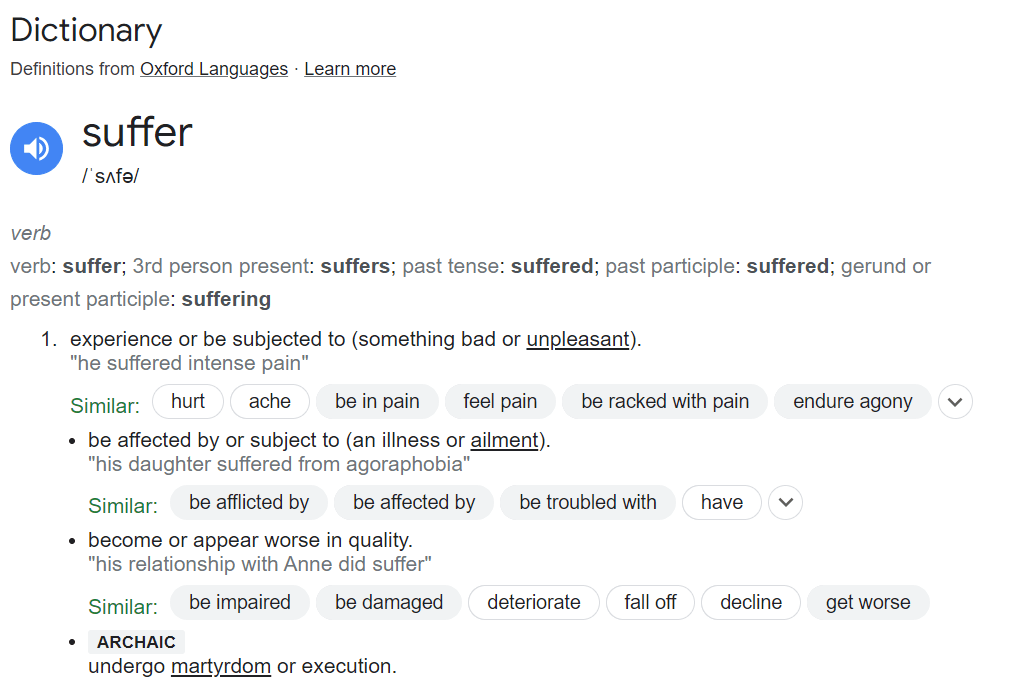
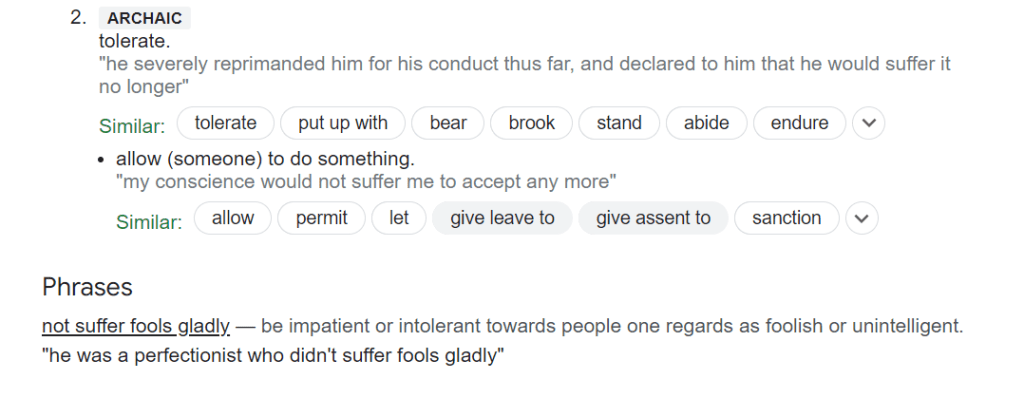
The word suffer, even in the archaic sense, means to tolerate or subject someone to a negative experience, attitude of behaviour. With this in mind, it is arguable that Exodus 22:18 is actually telling us to not suffer through a witch, meaning that we should not tolerate witchcraft to live. We should not seek out witchcraft, or any kind of sorcery, to sustain us for life. Keep in mind that up to this point, God has witnessed man not only commit sin but be subject to the Egyptians who referred to sorcerers mimicking God to deny belief in Him.
This interpretation (if I do say so myself) is a rather good perspective to have overall. God certainly views witchcraft as a sin and we should most definitely abstain from it.
From this it would be so unbelievably nice to say that the witch trials were created as a mistake. However, that is unbelievably false.
Despite popular belief, the witch trials were not biblical. Yes, puritan ministers took scripture to justify their actions but they also ignored key areas of scripture that defy their actions. The first and most potent being Exodus 20:13, found a mere two chapters prior to Exodus 22, Thou shalt not murder, which is the sixth commandment in the Ten Commandments as laid out in the Law of Moses. It is a bit far fetched to argue that God did not mean the people you want to murder when He made this decree. As much as God declares in the Old Testament that sinners should be put to death for their actions, He never declares that we as a people should take it upon ourselves to choose what other people deserve. The book of Judges, and later of Samuel and Kings, shows us that even those placed in a position of power should always turn to God for advice and commandments on how to act further. People like Samuel, David, and Solomon turned to God for the knowledge on how to proceed with issues. When they did not, for example in 2 Samuel 11, when king David *spoiler alert* slept with another man’s wife, got her pregnant, and then had the man murdered so he would not find out about David’s sin, God turned away from him. Taking matters into your own hands, instead of keeping faith in God to deliver you from the evil – or perceived evil – you are facing, will do nothing but sever your relationship with God and lead you down a path not meant for you.
It would be ideal to say that the witch trials were from a complete misunderstanding rather than paranoia overtaking and overwhelming people to the point that anything new was viewed as witchcraft; it would not be true, however. At the very least, we can negate the hatred Christians receive over the fact that scripture from the holy bible was used to justify killing innocent people, as it was used out of context.
 That Holy Girl
Leave a comment